Buyer journey · Step 4 · November 6, 2026
What is a home inspection, and what does it cover?
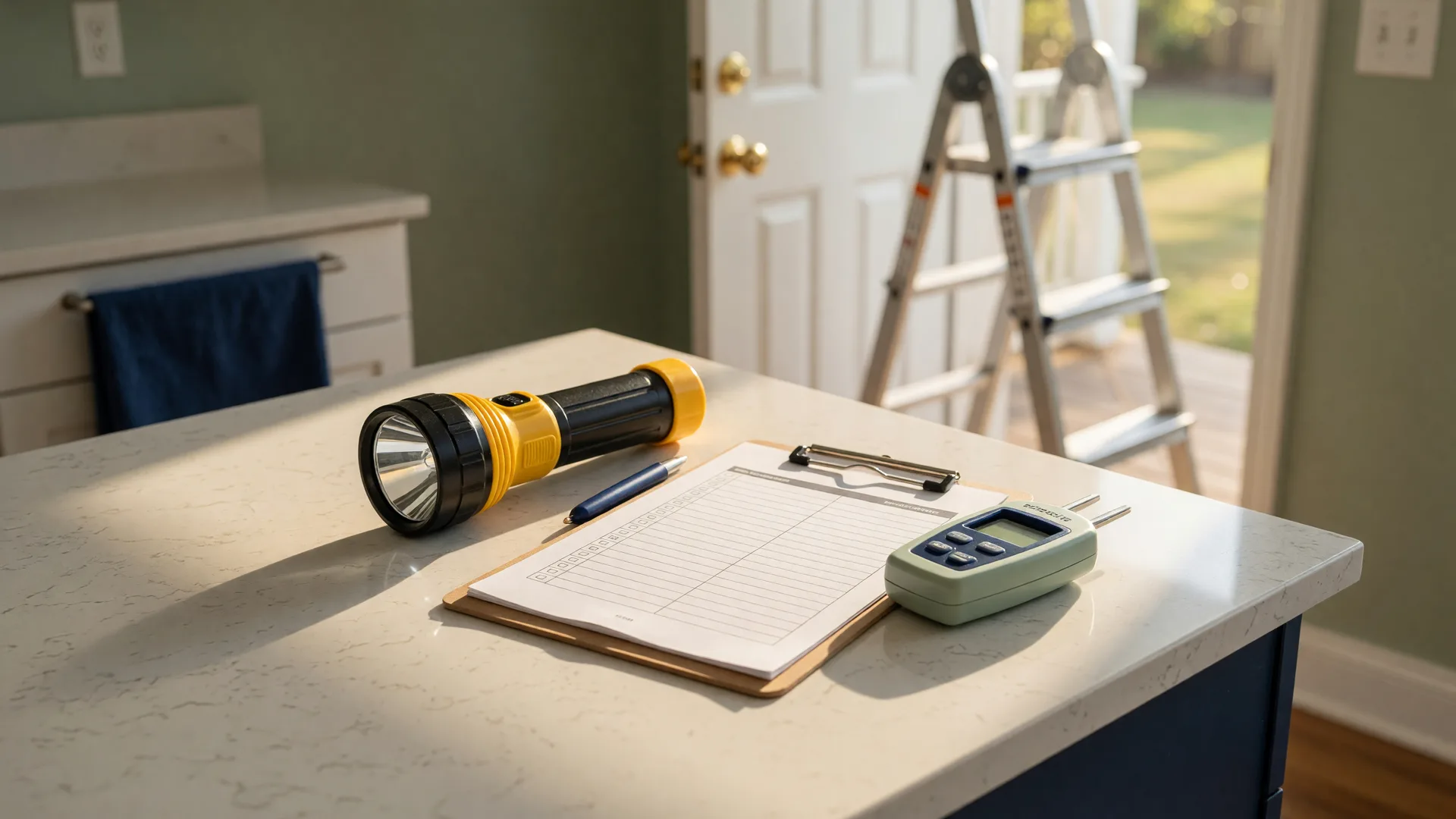
A home inspection is a licensed professional's top-to-bottom look at the home you are about to buy. The standard checklist covers the roof, foundation, electrical, plumbing, heating and cooling, insulation and ventilation, windows and doors, structure and framing, and visible safety issues like smoke alarms and railings. It is not a pass or fail test; it is a condition report. Nearly every home, old or new, has findings, and the skill is sorting them into what matters and what is just life as a homeowner.
How do you read an inspection report?
Every report lists dozens of findings, and the language is cautious by design. Sort them into three buckets: major defects like safety hazards and structural issues, minor wear like scuffed floors and dated fixtures, and maintenance notes like replacing a filter or servicing the furnace. Major defects justify a conversation with the seller. Minor wear is budget for year one. Maintenance notes are a gift: they are your to-do list for the first year you own the home. I review the report with you line by line so you never interpret alarm on your own.
What happens after the report lands?
When the report lands, there are really four paths: negotiate the price to reflect the true condition, request the seller repair the significant items, take a credit at closing and handle the work yourself, or walk away if something serious and uncorrectable turns up. The inspection contingency sets the deadlines, and the seller can accept, counter, or decline any request. Your agent's job is to walk the paths with you, not decide for you.
How do you negotiate repairs and credits?
Negotiation starts with quotes. Paul gets real numbers for the significant items so the request is grounded, then presents it to the seller's agent with a clear deadline. Many buyers prefer a credit at closing over seller repairs, because you control the contractor, the timing, and the standard of the work. The goal is a fair outcome, not a fight: the inspection is about protecting your purchase, and most sellers expect a reasonable request to follow a real finding.
Go deeper at this step.

Written by Paul Knighton
Paul is an Oregon Principal Broker and Idaho Associate Broker with MORE Realty, serving buyers and sellers across the Portland Metro and the Treasure Valley. He answers every inquiry himself.
More about Paul