Dual-market relocation guide
Relocating to Portland or the Treasure Valley.
This guide answers the questions that actually come up when you move between Oregon and Idaho: which neighborhoods fit which buyer, what the commute really looks like, how the taxes compare, what to check on water rights and flood zones, and the order of operations that keeps two closings on one calendar. Paul is licensed in both states and has made this exact move himself.
Start with the decision
Portland Metro or the Treasure Valley: what is different, honestly.
The two markets are priced similarly at the median and are deeply different in pace, taxes, and daily life. The table to the right is the short version. The sections below go deeper into neighborhoods, commutes, and the money.
Paul works both sides of the line every week. He does not try to sell you on one market; he helps you choose the one that matches your income, family, and priorities, then protects you through the move.
Portland Metro
Forests, rain, light rail, no sales tax. A mature metro with more housing choice and more negotiating room.
Treasure Valley
Sun, foothills, and open space. A fast-growing valley where you trade commute for square footage and lower property tax.
Side-by-side, plainly.
Market pace
Portland: More inventory, more negotiating room since 2025. Homes sell on a reliable timeline.
Boise: Fast and competitive. Lean supply, homes often under contract within days in Boise proper.
Typical price point
Portland: Metro median around $540,000, with wide variation by community.
Boise: Valley-wide median near $545,000, with the west valley more affordable.
Property tax
Portland: Effective rate around 0.8%, near the national average.
Boise: Effective rate around 0.5%, among the lowest in the nation, with a homeowner exemption.
State taxes
Portland: No sales tax, but a progressive income tax up to about 9.9%.
Boise: 6% sales tax, with a flat income tax of 5.3% for 2026.
Water rights
Portland: Standard municipal water; no farmland-style water rights attached to most homes.
Boise: Rural and canal-served properties can carry water rights that must be verified before closing.
Commute
Portland: A true metro with freeway and light rail. Allow 20 to 40 minutes metro-wide.
Boise: Compact. Most cross-town drives run 15 to 25 minutes.
Neighborhoods to consider
Start the shortlist here.
Twenty-seven community guides live on this site with price ranges, home types, and who each area suits. These picks are the most common landing spots for relocating families in each market.
Portland Metro
- Beaverton The broadest housing search and the best transit in the west metro.
- Lake Oswego Lakeside living and a walkable downtown.
- Oregon City Historic river town with newer master-planned communities.
- Wilsonville Master-planned living at the southern metro gateway.
Treasure Valley
- Boise Downtown energy, the river, and foothills on a fast clock.
- Meridian The new-construction capital of the valley, HOA-managed.
- Eagle Premium river and golf living at the top of the market.
- Kuna Country-adjacent suburb with entry-level new builds.
- Nampa Small-city energy with a growing downtown and one of the region's biggest farmers markets.
- Caldwell College-town energy with a walkable downtown along Indian Creek.
- Middleton A small-town pace with Boise River access and room to grow.
- Marsing Riverside small town on the Snake River at the valley's western edge.
The 2026 market deep dives
The full living-in guide for each market.
One page per metro, updated for 2026: lifestyle and neighborhoods, the housing market, commute and transit realities, cost of living, and an honest read on who each area suits.
 Oregon
Living in the Portland Metro Area in 2026
Neighborhoods, the housing market, transit, and cost of living in Oregon's largest metro.
Open the 2026 snapshot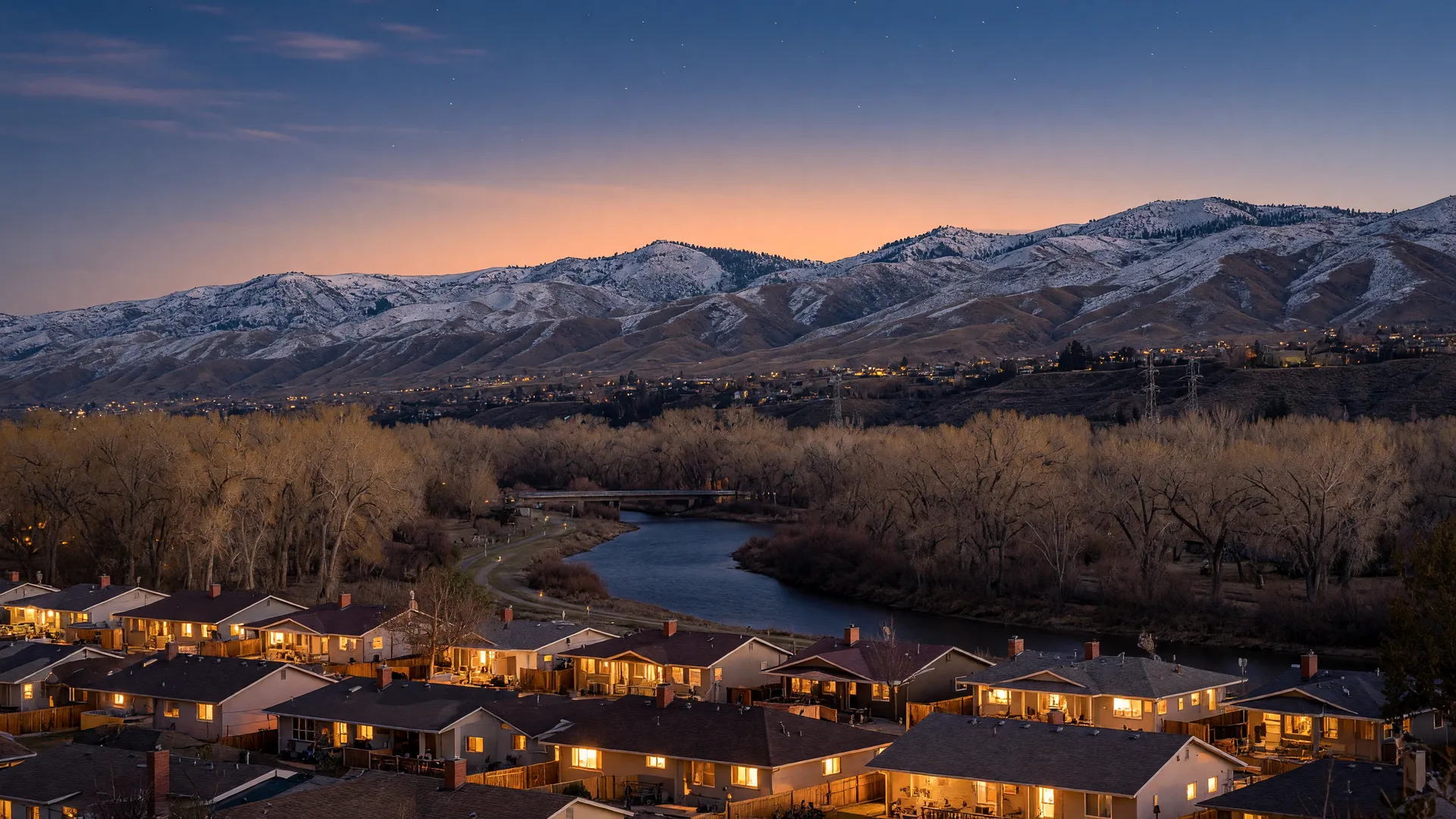 Idaho
Living in the Boise Metro Area in 2026
Growth, the housing market, commutes, and lifestyle in Idaho's Treasure Valley.
Open the 2026 snapshot Commute realities
How far is it, really, to work and life?
Portland Metro: this is a true metro spread across three counties. A Tigard to downtown Portland commute runs about 15 to 20 minutes; Bethany to downtown runs 25 to 30. The MAX light rail, WES commuter rail, and Trimet buses make car-free commuting real for many households.
Treasure Valley: the valley is compact. Most cross-town drives run 15 to 25 minutes, and the I-84 corridor ties the west valley to Boise in 25 to 40 minutes depending on where you start. Biking the Boise River Greenbelt is a genuine commute option in Boise, Garden City, and Eagle.
The honest advice: choose the neighborhood around your real commute, not the one on the brochure. Paul maps commute times for every relocation client before the first flight.
The money differences
Taxes and water: the two things nobody warns you about.
Property tax
Oregon's effective property tax rate sits near 0.8%, about the national average. Idaho's runs near 0.5% with a homeowner exemption that shields part of your assessed value. On a $600,000 home that is a real yearly difference.
Income vs. sales tax
Oregon has no sales tax but a progressive income tax topping out near 9.9%. Idaho charges 6% sales tax with a flat income tax of 5.3% for 2026. High-income households often pay meaningfully less in Idaho; big shoppers often save in Oregon.
Water rights
Idaho manages water under prior appropriation. A canal share, irrigation district assessment, or domestic well must be verified before you buy. Paul flags every water-attached parcel and brings in specialists for the review.
Flood awareness
Portland's floodplains follow the Willamette, Columbia, and Johnson Creek. Boise's follow the river and its canals. Check the FEMA maps and local flood layers before you fall in love, not after.
These comparisons are directional, not tax advice. Run your own numbers with a tax professional before you commit to a move. Paul's local-issues guide goes deeper on Idaho water rights, HOA rules, and flood zones in both markets.
Read the local-issues guideThe out-of-state mover's checklist
Ten items that keep a two-state move together.
Print this page or save it as a PDF. Paul walks every relocation client through this list before the first listing goes live.
Open the printable full checklist- 01
Decide the direction first: Portland to Boise, Boise to Portland, or fresh to either market.
- 02
Get pre-approved with a lender who understands your target market, not just your current one.
- 03
Run a realistic tax comparison: income tax, sales tax, and property tax for your income and home price.
- 04
If the new home is served by a well, canal, or irrigation district, verify the water rights before you offer.
- 05
Check flood zone status through the county or city flood maps, not just the seller's disclosure.
- 06
Research school districts by address, not by city name. Boundaries matter.
- 07
Build the sell-and-buy timeline on one shared calendar, 90 to 120 days out.
- 08
Budget temporary housing and moving costs into the plan, not as an afterthought.
- 09
Plan the license, vehicle, and voter registration tasks for after you land.
- 10
Talk to Paul early. One licensed advocate in both states keeps the whole sequence together.
Military relocation
A PCS move deserves a plan built around orders.
Service members and their families relocate on orders, not on market timing. Paul builds the sale and purchase timeline around your report date, and he pairs every military buyer with lenders who genuinely understand the VA program.
- VA loan basics: no down payment for most borrowers, no private mortgage insurance, competitive rates, and a reusable lifetime benefit.
- PCS timing: a military move runs on orders, not the market. Build contracting buffers around your report date.
- Mountain Home Air Force Base sits about 30 to 40 minutes from Boise; the Portland area is served by the VA hospital system in both states.
- The VA loan is a national program, so your certificate of eligibility works in Oregon and Idaho alike.
- SCRA protections and base legal offices can help with lease breaks and purchase timing when orders come through.
What military movers ask most
How does the VA loan work across state lines?
The VA loan is a national benefit. Your certificate of eligibility opens the same doors in Oregon and Idaho, including Mountain Home, Boise, and the Portland area.
Can a VA offer win in a fast market?
Yes. The VA appraisal and inspection requirements are protections, not problems. Paul negotiates flexible closing dates and clean inspection windows so VA buyers compete on equal footing.
What about Mountain Home and the bases nearby?
Mountain Home Air Force Base sits roughly 30 to 40 minutes from Boise, so valley communities from Kuna to Eagle are realistic daily commutes. Paul maps the drive against your unit's report time before you commit.
Relocation questions
The honest answers, before you have to ask.
Is one agent enough for a two-state move?
Yes, when that agent is licensed in both states. Paul holds an Oregon Principal Broker license and an Idaho Associate Broker license, so one person prices your Portland sale and writes your Boise offer, with local partners used where the details require them.
Which direction do people usually move?
Both, and increasingly both at once. Oregon families head to the Treasure Valley for affordability, space, and taxes. Idaho families move north for jobs, family, and the Portland metro lifestyle. The playbook is the same either way.
How different are the markets really?
Very different in pace. Portland has more inventory and more negotiating room, so sellers need honest pricing and patience. The Treasure Valley is leaner and faster, so buyers need to arrive pre-approved and decisive. Paul structures one plan that respects both clocks.
Are taxes really that different?
Yes, and the difference is structural. Oregon has no sales tax but a steep progressive income tax and property taxes near the national average. Idaho has a 6% sales tax, a flat income tax of 5.3% for 2026, and property tax effective rates around 0.5% with a homeowner exemption. Which one wins for you depends on your income and spending. Run the numbers with an advisor before you commit.
What about water rights in Idaho?
Idaho water is managed under prior appropriation: first in time, first in right. A home with a domestic well, a canal share, or an irrigation district assessment carries obligations and rights that must be verified before closing. Paul flags these on every Idaho property and connects buyers with specialists when a parcel has water attachments.
Do I need to tour homes in person?
Video tours and boots on the ground narrow the list dramatically, and Paul records walkthroughs for long-distance clients. For the final selection, most buyers do want to see the home in person, and Paul builds the offer timeline around your visit so you can act while you are in town.
How far in advance should I start?
Ninety to one hundred twenty days is the sweet spot for a coordinated sale and purchase. That gives you time for lender work, neighborhood research, and two closings that land on the same calendar instead of colliding.
Start the plan
Tell Paul about the move you are planning.
Where you are now, where you are going, and when. Paul will respond with a first-draft plan: what needs to happen, in what order, and where the risks are in your specific situation.
Two states, one advocate.
A 20-minute call is enough to map your move, spot the risks, and get the plan in motion.