Boise Metro · Treasure Valley · Idaho
Living in the Boise Metro Area in 2026
This is Paul's 2026 snapshot of daily life in the Boise Metro and the Treasure Valley: the growth story, what the neighborhoods feel like, where the housing market stands this year, how the commute really works, and what living here costs. Paul recently made the move from Portland to the valley himself, so this is the current, honest picture he gives relocation clients before they visit.
Last updated October 2026
Download the Treasure Valley Homebuying & Relocation GuideThe 2026 snapshot
Growth that has settled into something steadier.
After the double-digit spikes of 2020 through 2022, the Treasure Valley in 2026 reads as a market that has grown up: prices are stable, inventory is slightly healthier, and homes still move fast but no longer in a frenzy. With roughly 848,000 residents across Ada and Canyon counties, the valley pairs a fast-growing economy with the outdoor lifestyle that first put it on the map.
The honest trade-offs have not gone anywhere: a car is the practical default, summer brings real heat, and water rights need verifying on well and canal properties. The sections below walk each one with the real numbers, so a relocation decision is made on facts instead of brochure language.
~$545,000
Valley median sale price
Mid-2026 reports, up roughly 3% to 7% year over year
~16 days
Average days on market
Boise homes, with about two offers on average
~848,000
Treasure Valley residents
Across Ada and Canyon counties
~18 min
Average one-way commute
Well below big-metro norms
Lifestyle and growth
A fast-growing valley with four seasons outside the door.
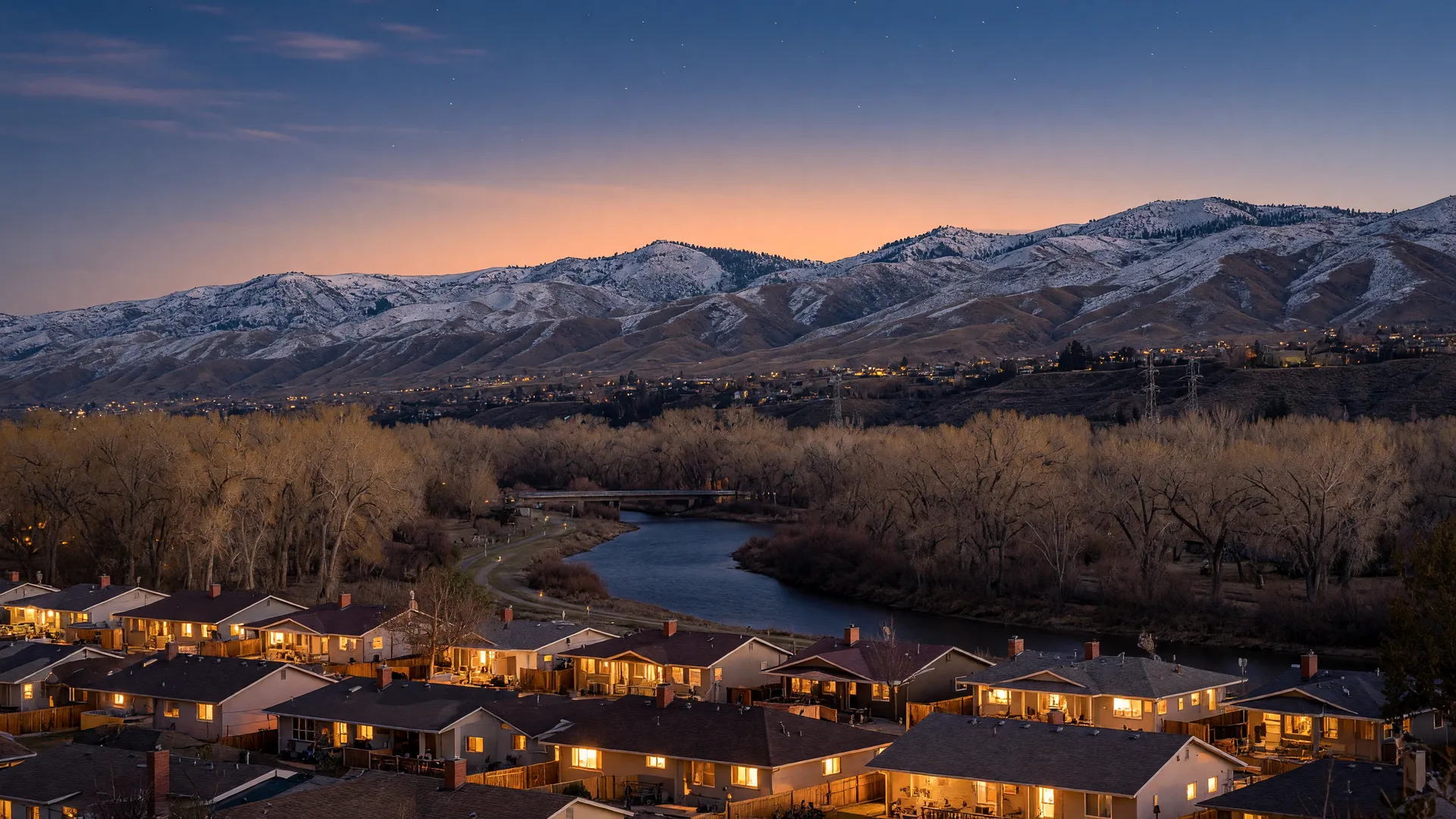
The Treasure Valley has been one of the country's fastest-growing metros for years, and 2026 shows the payoff: a walkable downtown Boise, new-construction neighborhoods stretching through Meridian and Kuna, and a river running straight through all of it. The Boise River Greenbelt connects more than 25 miles of parks and paths, the foothills trail system starts at the city's edge, and Bogus Basin ski area sits about 16 miles from downtown.
Each community has its own clock: Boise proper for downtown energy, Meridian for master-planned new builds, Eagle for the premium tier, Kuna and Caldwell for the value end of the valley. Paul now calls the valley home and works every one of these markets weekly.
Relocation Resources
Two dedicated guides for the practical side of a move to the valley.
Paul points relocating clients to focused resources that cover the logistics of moving to the Treasure Valley, so the details are handled before you land.
Relocating for the Micron expansion
Moving to the Boise area for Micron?
Micron's major expansion in southeast Boise is bringing thousands of jobs and people to the Treasure Valley, and it is already reshaping which neighborhoods buyers consider and how quickly homes move. If you are relocating to the area for Micron, there is a dedicated resource for the practical side of that move.
What to know first
- The Micron campus sits in southeast Boise, and that corridor is the valley's growth story to watch.
- The expansion adds thousands of direct jobs, with many more in construction and supporting industries.
- The Moving to Boise Area site is built around the practical side of the move: neighborhoods, the commute, and getting settled.
Acreage, hobby farms, and homes on land
Looking for acreage, a hobby farm, or a home on land?
If the draw of Idaho is land, Acreage Homes Boise is a dedicated resource for finding acreage, hobby farms, and homes on larger lots across the Treasure Valley.
How it helps
An acreage-focused resource for relocating buyers who want room to spread out: hobby farms, homes on land, and larger properties across the valley. Paul pairs it with current market context for the specific area you are watching.
The housing market in 2026
Steadier prices, but homes still move fast.
The valley is no longer the moonshot market of 2021, but it is still a seller-friendly one. These are the numbers that define buying and selling here in 2026, drawn from published market data.
The market, in one line
The valley-wide median sale price sat near $535,000 to $545,000 in the middle of 2026, up roughly 3% to 7% from a year earlier, with Boise homes averaging about 16 days on market: still lean, still fast, and still rewarding the prepared buyer.
Figures come from published mid-2026 market reports and shift month to month. Ask Paul for current comparable sales on the specific community or street you are watching.
Commute and lifestyle factors
Short drives and the Boise River running through the valley.
The valley is compact by western standards. Most of what you need is 15 to 25 minutes away, and the outdoors is closer than that.
The average one-way commute runs about 17 to 20 minutes, and most cross-town drives land between 15 and 25 minutes. The I-84 corridor ties the west valley to Boise in 25 to 40 minutes depending on where you start.
A car is the practical default. The valley is car-oriented, and most of daily life happens outside downtown, so a household vehicle is a necessity for most buyers.
But the greenbelt is real. The Boise River Greenbelt runs 25-plus miles, and in Boise, Garden City, and Eagle a greenbelt bike commute is a genuine option many residents actually use.
Downtown Boise is compact and leafy, with a strong food and brewery scene, and most of the city's nightlife sits within walking distance of its center.
Four seasons start at your doorstep: the foothills trail system begins at the city's edge, Bogus Basin ski area is about 16 miles from downtown, and the Boise National Forest is within about an hour.
The honest advice: the commute you accept in the west valley (Kuna, Caldwell, Star) buys you square footage and a lower price, and the I-84 drive into Boise is the trade you make consciously. Paul maps it for every relocation client before the first flight.
Cost of living factors
Modest premiums, lower taxes, cheaper utilities.
Housing runs slightly above average
Housing costs run about 6% above the U.S. average, a far smaller premium than most western metros. Median household income sits near $85,900, which keeps homeownership within reach for many moving families.
Taxes lean lighter
Idaho charges a 6% sales tax and a flat income tax of 5.3% for 2026. The valley's effective property tax rate runs around 0.5% with a homeowner exemption, among the lowest in the country.
Utilities run below average
Energy and utility costs run roughly 27% below the national average, a quiet monthly win in a state with cold winters and hot summers.
These are directional comparisons from published 2026 cost-of-living guides, not financial advice. Run your own numbers with a tax professional before committing to a move. Paul's Oregon versus Idaho property tax breakdown goes deeper on the difference.
Read the Oregon vs Idaho tax breakdownWho this area suits
The Boise Metro in 2026 fits a specific life.
The valley rewards buyers who bring flexibility and a love of the outdoors. If that sounds like you, this is one of the most livable growing metros in the country.
- Buyers who want new construction: Meridian, Kuna, Caldwell, and Star are the valley's building corridors
- Outdoor-first households who want to ski, bike, hike, and fish all in the same week
- First-time buyers who want square footage and a lower property tax bill than most metros
- Remote and hybrid workers with flexible commutes who value quality of life over proximity
- Families who like master-planned communities with pools, parks, and predictable HOA upkeep
- Sellers in a still-competitive market where a ready home attracts the most attention
Trade-offs to weigh honestly
- Summer heat that regularly pushes into the 90s, with dry winters to match
- Car dependence for most errands, especially outside downtown Boise
- Water rights to verify on well, canal, and irrigation-served properties
- A fast market that punishes hesitation more than it rewards waiting
None of these are deal-breakers on their own. Paul walks relocation clients through all of them before the first offer.
Relocation questions, answered
Top 10 questions people ask about relocating to Boise.
The questions Paul hears most from relocation clients, answered in the same plain language he would use on the phone.
How expensive is it to live in the Treasure Valley?
The Treasure Valley's cost of living sits modestly above the U.S. average, with housing as the main driver and utilities coming in well below average. Home prices and rents have cooled from their 2021 to 2022 peak but remain well above Idaho's rural averages. Most newcomers find the valley cheaper than the West Coast metros they left, especially once property taxes and utilities are in the math.
Are Idaho property taxes and income taxes really that low?
Idaho's individual income tax is a flat 5.3% for 2026, and the state charges a 6% sales tax. Property taxes are levied locally on market value, and Idaho's effective rate runs around 0.5% statewide, among the lowest in the country, with a homeowner's exemption of up to $125,000 of assessed value on an owner-occupied primary residence. That lighter tax load is a headline reason so many Oregon and California transplants choose the valley.
What do homes cost in the Boise metro right now?
Published IMLS and valley market data put the median sale price near $535,000 to $545,000 in mid-2026, up roughly 3% to 7% from a year earlier. The spread matters more than the median: Eagle's median runs near $931,000, Meridian near $568,000, and Nampa near $411,000. Boise homes averaged about 16 days on market, so buyers arrive pre-approved and ready to decide.
What is the weather like?
The valley gets four distinct seasons in a high-desert setting: hot, dry summers with July highs near 90 degrees, and sunny, low-humidity winters where snow often melts within days. Winter inversions can trap haze over the valley, and wildfire smoke is possible in late summer. The dry air is a genuine change for transplants from the West Coast.
How bad is the commute?
The average one-way commute in the valley runs about 17 to 20 minutes, below national averages, though growth is adding congestion on I-84 and the Meridian interchanges. A car is the practical default; public transit is limited and most of daily life is spread across a wide valley. The Boise River Greenbelt is the exception, with more than 25 miles of riverfront paths connecting bike commutes in Boise, Garden City, and Eagle.
Which school districts serve the area?
The Boise School District serves the city proper, while the West Ada School District covers Meridian, Eagle, and Star and is one of the state's largest. Nampa, Caldwell, and Middleton districts serve the west valley. Quality varies by school and by campus, so research the specific boundary for any address, and Boise State University anchors higher education in the city.
What is the job market like?
Micron's major semiconductor expansion in southeast Boise has made the valley one of the country's fastest-growing tech markets, adding thousands of direct jobs with many more in construction and supporting industries. Healthcare, education, and state and local government round out a stable employment base. An influx of remote workers with West Coast salaries has also kept housing demand strong. If you are relocating to the area for Micron, the dedicated Moving to Boise Area guide is a helpful starting point for the practical side of the move, from neighborhoods and commuting to getting settled.
What are the best neighborhoods for relocating families?
Boise's North End is the beloved close-in choice: walkable, historic, and the priciest tier in the city. Meridian's master-planned communities dominate the family market, Eagle and Star offer the higher-end suburban tier, and Kuna and Caldwell deliver the best value per square foot. East and southeast Boise near the Micron campus are the growth corridor to watch.
Is there enough water in the Treasure Valley?
The valley gets its drinking water from the Boise River and the region's aquifer, and municipal systems generally meet demand, but this is a high-desert environment and drought years bring watering restrictions. Homes on wells, canals, and irrigation systems carry separate water rights that must be verified before an offer, and Boise's tap water is on the harder side. Paul's local issues guide covers water rights, HOA rules, and flood exposure in detail.
What is daily life really like in the Treasure Valley?
Life is organized around the outdoors: the Boise River Greenbelt, the foothills trail system at the city's edge, and Bogus Basin ski area about 16 miles from downtown. The valley is family-oriented and fast-growing, with constant construction and rising traffic as the trade-offs. Most transplants report the active, community-driven lifestyle exceeds expectations even when the housing math required an adjustment.
The Oregon-Idaho corridor
Why are so many Oregonians moving to Idaho?
Affordability and tax math are the headline: Idaho's flat 5.3% income tax, roughly 0.5% effective property tax rate, and below-average utility costs typically cost less than Oregon's progressive income tax, which reaches 9.9%, and its 0.8% average property tax. The Treasure Valley also offers more new construction, more land, and a slower pace of life, and remote work has made the move increasingly practical. Census Bureau state-to-state data has ranked Idaho among the top inbound-migration states for years, with Oregon consistently one of its largest source states.
What do I need to know about taxes and cost of living moving from Oregon to Idaho?
Idaho collects a flat 5.3% individual income tax for 2026 and a 6% sales tax, in place of Oregon's no-sales-tax structure and progressive income tax that reaches 9.9%. Idaho's effective property tax rate runs around 0.5%, with a homeowner's exemption of up to $125,000 of assessed value on a primary residence, versus roughly 0.8% across Oregon. Housing medians land close in the two metros, while utilities in the valley run well below the national average, which trims the monthly budget.
How does the housing market compare between the Portland area and the Treasure Valley?
Median sale prices are closer than most people expect: roughly $535,000 to $545,000 in the Treasure Valley versus about $540,000 in the Portland metro, per published IMLS and RMLS market data. The pace is the real difference: Boise homes averaged about 16 days on market with limited inventory, while Portland's roughly 62 days and near four months of supply give buyers room to negotiate. The valley rewards speed and decisiveness; Portland rewards patience.
Market figures in this section come from published RMLS, IMLS, WVMLS, and SOMLS market data and public state sources, and they shift month to month. Ask Paul for current comparable sales on the specific community or street you are watching.
Your move, your market
Thinking about a move to the Boise Metro?
Tell Paul what you are looking for in the valley, and he will reply with current inventory, comparable sales, and an honest read on which communities fit your budget and your commute.
Prefer to talk it through?
503-475-6136Paul represents all qualified buyers and sellers. Equal Housing Opportunity.
Get the free Oregon vs Idaho relocation checklist
The full printable checklist, organized into four phases for a move in either direction. Share a couple of details so Paul's team can help with your move, then open the printable page right away.
Thanks! Your checklist is ready.
The printable Oregon vs Idaho relocation checklist is one click away. Save it as a PDF or print it and tick items off as you go.
Open the printable checklistTreasure Valley or Portland Metro? One advocate for both.
A 20-minute call is enough to compare the two metros, spot the risks, and start your plan.